
I have always held administrative positions alongside my community work, teaching and research/scholarship. Prior to working in academia, I was director of a variety of departments within human relations and civil rights organizations as well as community youth programs. Since 2009, in addition to teaching, I have been the Assistant Vice President of Community Engagement at Pitzer College and in that role I have been the director of the Community Engagement Center, the Inside-Out Prison Education Program, the Office for Consortial Academic Collaboration and CASA (Critical Advocacy & Social Action community center and action research program) (formerly Pitzer in Ontario), which is my primary focus today.
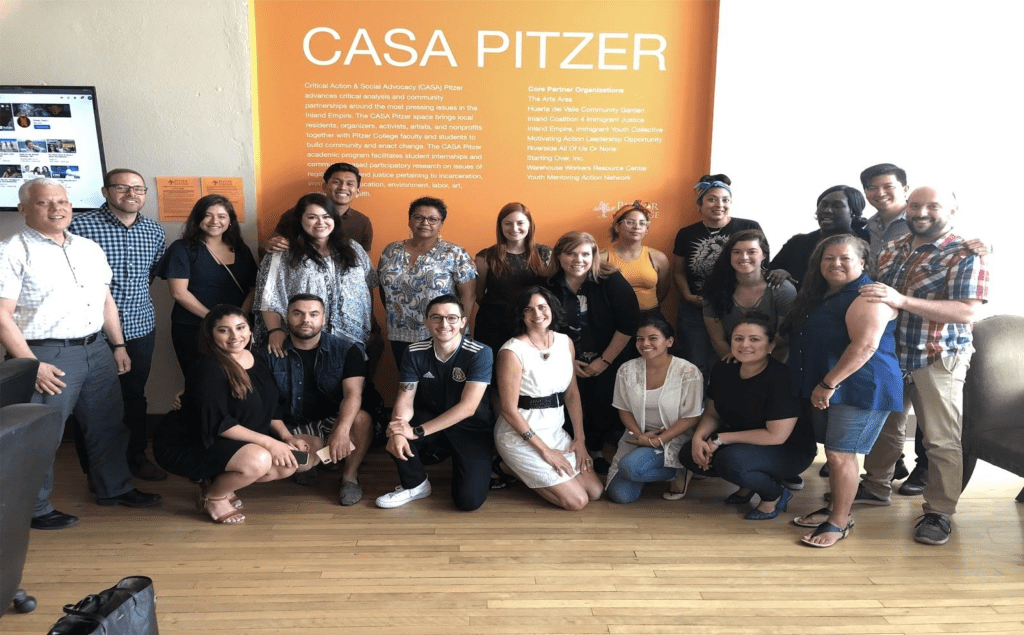


CASA (Critical Action and Social Advocacy)
Tessa has taught the core courses of the CASA community-based, participatory action research program, CASA, since she began at Pitzer in 2006. She was appointed to the position of CASA (Critical Action and Social Advocacy) in July 2018, which she continues to today.
CASA Pitzer MISSION
CASA Pitzer advances critical analysis and community partnerships around the most pressing issues in Southern California’s Inland Valley. The CASA Pitzer community center (a large community space in downtown Ontario) brings local residents, organizers, activists, artists, and nonprofits together with Pitzer College faculty and students to build community and enact change. The CASA Pitzer academic program (a two-course community engagement and research program) facilitates student internships and community-based participatory research on issues of regional equity and justice pertaining to incarceration, immigration, education, environment, labor, art, culture, and health.
CASA Pitzer GOALS
- Work collaboratively with community partners on research, service, organizing, and action projects that confront injustice and work toward justice, equity, rights, wellbeing, and community building.
- Ensure work is responsive and accountable to the community, makes a positive impact, achieves long- and short-term goals, and generates meaningful community-building for all involved.
- Provide critical pedagogy-based teaching about self, other, social problems, social movements, and effective methods for social impact.
- Support, mentor, and critically teach our students, while respecting and learning from their knowledge and experiences.
- Create a space that is inclusive, welcoming, and supportive for community building, justice work, participatory action research, and personal and organizational development.
 Tessa Hicks Peterson